Introduction
Lung cancer remains the leading cause of cancer-related mortality in the United States, accounting for approximately 20% of all cancer deaths.1 Beyond mortality, lung cancer imposes a substantial economic burden, with more than $21 billion annually in lost earnings due to premature mortality in the United States.2 Historically, poor survival has been driven by late-stage diagnosis; however, recent trends suggest a meaningful shift toward early detection. Localized disease has increased by 3.6% annually, and distant-stage disease has decreased by 4.6% annually.1 This shift has coincided with expanded implementation of low-dose computed tomography (LDCT) screening, which has been shown to reduce lung cancer mortality by approximately 24% among high-risk populations and to increase early-stage detection.3 Despite clear evidence of benefit, LDCT screening uptake remains low, with only 18.1% of eligible U.S. adults undergoing screening in 2022.4
Adherence to ongoing screening further limits the potential impact of LDCT programs. In racially diverse cohorts, only 23.7% of patients return for annual screening at 1 year, with adherence dropping to as low as 2.8% by 2 years.5 Similar patterns are observed in safety-net settings, where approximately 8% of patients adhere to annual screening, and Hispanic patients demonstrate lower adherence compared with Black and White patients.6
Although Hispanic and Latino populations have lower overall smoking prevalence and lung cancer incidence, they are more frequently diagnosed at later stages and experience worse outcomes.7,8 Hispanic individuals are also more likely to be diagnosed at younger ages despite having fewer pack-years yet receive lower rates of guideline-concordant treatment, including surgery, radiation therapy, and biomarker testing.8 These disparities reflect multilevel barriers, such as structural inequities, healthcare access, and system-level bias, which limit access to high-quality care and diminish survival advantages associated with specialized services, socioeconomic resources, and insurance coverage.9 Accordingly, this systematic review synthesizes existing evidence on bias in lung cancer screening and care among Hispanic populations to identify critical gaps and inform targeted, equity-focused interventions to improve outcomes.
Methods
The study was exempt from the oversight of the Institutional Review Board.
Search Strategy
A PubMed and EMBASE search was performed for English-language articles conducted with human studies. Search queries were developed to identify publications on disparity, bias, and barriers in lung cancer and screening among Hispanic/Latino (HL) populations in the United States (Supplement 1). The search was conducted on November 11, 2025. Identified articles were uploaded to Rayaan Software for continued review. Duplicates were detected and deleted. Three investigators (A.T, O.A., and C.B.) independently reviewed titles and abstracts to determine eligibility using the prespecified inclusion criteria. Disagreements were resolved by discussion and consensus, or when necessary by consultation of a fourth investigator (M.G.). Then, three investigators (A.T., M.G., and M.R.) independently reviewed full-text articles to determine eligibility using the same inclusion criteria. Discrepancy in opinions was discussed and resolved by the majority or consensus.
Inclusion and Exclusion Criteria
Original studies based in the United States and written in English with primary outcomes in disparities, bias, and barriers to lung cancer and lung cancer screenings in Hispanic/Latino populations were included. All studies that are non-USA were excluded. Publications that did not discuss disparities and were not original research, including reviews, editorials, letters to the editor, and guidelines, were excluded.
Data on study design and relevant outcomes, population, sample size, study limitations, and time frame were extracted. Publication results comparing HL and non-HL populations were categorized as follows: Yes – the HL population experienced worse outcomes than the non-HL population; No – the HL population experienced outcomes that were better than or similar to those of the non-HL population; Mixed – the HL population showed better outcomes for at least one measure and worse outcomes for another.
Results
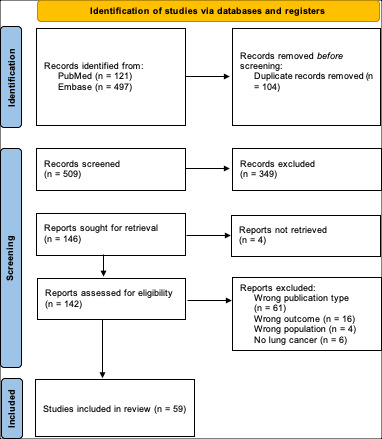
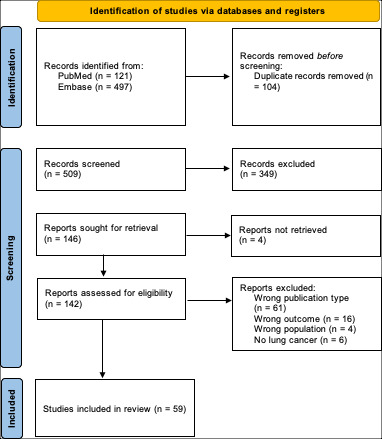
618 articles were identified, 109 duplicates. 509 articles went into title/abstract screening, and 146 articles went into full text screening. A total of 59 studies met inclusion criteria and were included in the final analysis (Table 1). Publication years ranged from 1994 to 2025; 48 studies (81.4%) were published in 2018 or later, and 40 studies (67.8%) were published in the last 5 years.
Table 1.
| Citation |
Study Design |
Population |
Key Findings |
Limitations |
Study settings |
Time frame |
Sample size |
Disparity |
| Akanbi et al., 202510 |
Retrospective cohort |
Adults in the United states, aged between 55 and 80 with metastatic lung cancer in Surveillance, Epidemiology, and End Results (SEER) database. |
The incidence of metastatic lung cancer was lowest among Hispanic patients but, unlike other racial groups, Hispanics did not have improvement in incidence throughout the study period. |
Observational |
SEER Database |
2004-2019 |
445,715 |
No |
| Alaniz-Cantú et al., 202411 |
Qualitative |
Latino adults (60% were born in Puerto Rico). 50% were insured by Medicaid. |
Participants identified barriers to LCS: 1) Fear of outcomes, 2) cost, 3) lung cancer screening not being recommended by their clinician, 4) lack of knowledge about the procedure, 5) self-blame, 6) transportation, and 7) lack of time. |
Qualitative |
Academic-based clinic |
2022–2023 |
32 |
|
| Aredo et al., 202212 |
Prospective cohort |
Multiethnic Cohort |
USPSTF criteria widened disparities in LCS eligibility for Latinos |
Cohort-specific |
SEER Database |
Lung cancers diagnosed 1993–2017 |
5,900 |
Yes |
| Bassiri et al., 202313 |
Retrospective cohort |
Early-stage lung cancer surgery |
Being Hispanic was not associated with delayed timing to surgery from diagnosis |
Retrospective |
Multicenter academic hospitals (NCDB) |
2004–2018 |
201,784 |
No |
| Bilani et al., 202314 |
Retrospective cohort |
Hispanic NSCLC patients |
Hispanic individuals living in the United States, region/country of origin were significantly associated with overall survival and stage at diagnosis, even after accounting for other known determinants of health. |
Small subgroups |
US cancer registry data |
2004–2017 |
3,398 |
Mixed |
| Borrayo et al., 202015 |
Qualitative |
Hispanic lung/HN cancer patients |
Treatment challenges and support needs were reported in medical, financial, socio-cultural, and mental health areas. |
Small qualitative |
Community oncology clinics |
2016–2018 |
42 |
|
| Chau et al., 202116 |
Retrospective cohort |
Patients diagnosed with NSCLC in Surveillance, Epidemiology, and End Results (SEER) database. |
Hispanics US-born (10 m) overall survival was similar to White US-born (11 m). |
State-specific |
California Cancer Registry |
2000-2012 |
68,232 |
No |
| Check et al., 201817 |
Retrospective cohort |
Early-stage NSCLC patients |
Integrated health system reduced disparities in Hispanic population for receiving surgeries. |
Selection bias |
California Cancer Registry + Singke Urban Integrated healthcare system |
2004–2011 |
5,786 |
|
| Choi et al., 202418 |
Retrospective cohort |
Lung cancer survivors |
First LC incidence was lower among Hispanics, the 10-year
SPLC incidence was higher among Hispanics. |
Survivorship bias |
SEER Database |
1992–2018 |
156,494 |
Yes |
| Cranford et al., 202319 |
Retrospective cohort |
US lung cancer cases |
Marked subgroup heterogeneity: Among Hispanics, Cuban males had the highest LC age-adjusted incidence rates (AAIR) but lower than Whites, and 2.7 times higher than Central Americans. |
Descriptive |
SEER Database |
2000–2018 |
120,550 |
No |
| Crowell et al., 200720 |
Retrospective cohort |
Early-stage NSCLC |
No differences in survival between Hispanics and NHW, although rural Hispanics had a higher mortality hazard than urban Hispanics. |
Small samples |
Rural vs. Urban |
1999–2003 |
1,450 |
No |
| Duong et al., 201721 |
Cross-sectional survey |
Academic center patients |
Hispanics were more non-adherent. Knowledge gaps reduced adherence |
Single center |
Academic medical center |
2015–2016 |
212 |
Yes |
| Enogieru et al., 202522 |
Retrospective cohort |
Cancer inpatients |
Higher 60-days readmissions among Hispanic with residence in a lower income ZIP code and Medicaid insurance |
Administrative data |
Nationwide Inpatient Sample |
2016–2019 |
1,148,597 |
Yes |
| Farias et al., 202323 |
Retrospective cohort |
SEER-CAHPS lung cancer patients |
Hispanic patients reported lower ability to get needed care compared to White patients, which was associated with higher risk of mortality. |
Survey linkage |
SEER-CAHPS linked cohort |
2007–2015 |
1,776 |
Yes |
| Gupta et al., 202224 |
Retrospective cohort |
NSCLC patients |
Lower area-level SES was associated with increased odds of advanced NSCLC diagnosis. 70% of Hispanic patients lived in the lowest education and income areas and were more likely to be diagnosed at an advanced stage. These disparities persisted even when patients were treated at academic/research programs. |
Area-level proxy |
National Cancer Database (NCDB) |
2004–2016 |
1,329,972 |
Yes |
| Gutierrez et al., 202325 |
Cross-sectional |
US–Mexico border |
Hispanic lung cancer mortality rates were not different in border counties compared to non-border counties |
Ecologic |
US border vs non-border counties |
1999–2018 |
3,246,391 |
|
| He et al., 202426 |
Retrospective cohort |
Hispanic adults |
In general, foreign-born Hispanics had higher cancer mortality rates than US-born, except Mexicans. Both Hispanic groups experienced decreasing rates of cancer deaths over the years. |
Death certificate misclassification |
US death certificates |
2003–2017 |
228,197 |
Mixed |
| Heintzman et al., 202527 |
Cross-sectional registry |
Latino community health center patients eligible for LCS |
Foreign-born Latinos had lower LCS uptake |
Limited generalizability; CHC population only |
OCHIN network of community health centers |
Jan 1, 2013 – Sep 30, 2022 |
126,969 |
Yes |
| Hong et al., 202428 |
Cross-sectional survey |
Adults eligible for LCS |
Minorities less likely to have shared-decision making for LCS |
Self-report bias |
National survey cohort (HINTS-linked) |
2017–2020 |
6,886 |
Yes |
| Houston et al., 201829 |
Retrospective cohort |
Adults diagnosed with lung and bronchus cancer in the United States |
Hispanics consistently showed the lowest incidence rates across almost all histological types, approximately half the rate of NHWs and NHBs. |
Confounding variables |
SEER Database and CDC National Program of Cancer Registry (NPCR) |
2004-2013 |
1,751,728 |
No |
| Javier et al., 202530 |
Retrospective cohort |
Integrated health system |
Hispanic participants had a 34% lower likelihood of faster completion LDCT under 2013 USPSTF guidelines |
Single system |
Single Urban Integrated healthcare system |
|
N (2013 Guidelines) - 28046 N (2021 guidelines) - 60,676 |
Yes |
| Jemal et al., 201831 |
Retrospective cohort |
US population |
Only Hispanics had higher incidence of lung cancer in young women |
Incidence only |
SEER Database |
1995–2014 |
392,018 |
Yes |
| Khan et al., 202532 |
Retrospective cohort |
Aged 65 years and older with a diagnosis of gastrointestinal, lung, and breast cancer |
Hispanic patients had the lowest odds of receiving NGS |
Only Medicare patients |
Medicare Standard Analytic File |
2015-2020 |
1,466,105 |
Yes |
| Kim et al., 202233 |
Retrospective cohort |
Hospitalized lung cancer patients |
Hispanics have higher hospital charges and length of stay. |
Administrative data |
Nationwide Inpatient Sample |
2010–2014 |
47,121 |
Yes |
| Kirtane et al., 202334 |
Cross-sectional |
Cancer center patients |
Hispanics were more likely to present to cancer center at an advanced stage compared to non-Hispanic patients |
Single center |
Single Urban comprehensive cancer center |
Dec 2008 – Apr 2020 |
41,539 |
Yes |
| Klugman et al., 202035 |
Retrospective cohort |
NSCLC patients |
HLs experienced decreased risk of death relative to NHWs |
Single region |
Urban |
2005–2015 |
2,308 |
No |
| LaPar et al., 201136 |
Retrospective cohort |
Lung resections patients |
Hispanics demonstrated decreased risk-adjusted complication rates. |
Registry limits |
Nationwide Inpatient Sample |
2003–2007 |
35,000 |
No |
| Li et al., 202137 |
Retrospective cohort |
Metastatic lung cancer patients |
Improved survival for all racial groups |
State-specific |
California Cancer Registry |
1990–2014 |
91,377 |
No |
| Liu et al., 202438 |
Retrospective cohort |
Patient with non-small cell lung cancer |
Hispanic patients had 12% higher odds of advanced-stage NSCLC diagnosis than NHWs, but this disparity disappeared or reversed depending on which region in Florida Hispanics live and their country heritage. |
Data only in florida and may not be generalizable. |
Florida cancer registry |
2005-2018 |
157,034 |
Mixed |
| Mehta et al., 201839 |
Retrospective cohort |
NSCLC patients |
Hispanic ethnicity was associated with an increased risk of mortality. |
Residual confounding |
SEER Database – Medicare cohort |
2000–2013 |
37,993 |
Yes |
| Merrill et al., 201340 |
Cross-sectional |
US cancer cases |
Lower incidence and detection at later stages than Whites. |
Descriptive |
US cancer registry data |
2000–2009 |
|
Yes |
| Morgan et al., 202041 |
Retrospective cohort |
NSCLC patients |
Hispanics were less likely to receive PET with CT imaging than Whites. PET with CT was associated with improved survival. |
Claims-based |
SEER Database – Medicare cohort |
2004–2013 |
46,893 |
Yes |
| Nardi et al., 201942 |
Retrospective cohort |
Nonelderly lung cancer pts |
When considering SES, race has no impact on treatment receipt |
NCDB limits |
Urban |
2004–2015 |
101,405 |
No |
| Narra et al., 202543 |
Retrospective cohort |
Lung cancer patients in safety-net system |
Race and ethnicity were not associated with survival differences. |
Single center |
Single safety-net academic medical center |
220 |
No |
| Neighbors et al., 200744 |
Retrospective cohort |
Lung resection patients |
Latinos had lower odds of obtaining lung resection at a high-volume hospital than non-Hispanic whites. Latinos had higher odds of dying in hospital. |
Older data |
Nationwide Inpatient Sample |
1995–2002 |
64,782 |
Yes |
| Núñez et al., 202245 |
Prospective cohort |
US Veterans |
Hispanic vetarans were less likely to decline LCS |
Veteran population |
30 Veterans Health Administration (VHA) facilities |
2013–2021 |
43,257 |
No |
| Nykaza et al., 202546 |
Retrospective cohort |
NSCLC patients |
Hispanic patients had lower odds of receiving immunotherapy compared to non-Hispanic White patients. Hispanic patients had higher rates of immunotherapy after 2 months compared to non-Hispanic Whites. |
Claims data |
National claims cohort |
|
302,744 |
Yes |
| Oh et al., 202447 |
Retrospective cohort |
Patients at California Cancer Registry |
Being Hispanic male in rural areas was a predictor for increased odds of later-stage diagnosis. |
Focusing on only the most common cancer sites and reporting specific results for two racial and ethnic groups. Did not look at regional differences. |
Rural vs. Urban |
2015-2019 |
497,559 |
Yes |
| Olateju et al., 202548 |
Retrospective cohort |
Adults with histological diagnosis of lung cancer, diagnosed between 2010 and 2019, with follow-up through December 31, 2021. |
Hispanics had a higher proportion of uninsured patients and patients residing in low-income areas. Hispanics had an 11% higher mortality risk for NSCLC, but socioeconomic factors accounted for 60% of variance. Hispanics with localized NSCLC had lower mortality risks compared to Whites, but more often were diagnosed at advanced stages. The higher proportion of Hispanics received immunotherapy. |
Socioeconomic status was incompletely characterized. No stratification among Hispanic subpopulations. Underreporting of comorbidities. |
Texas Cancer Registry |
2010–2019 |
199,000 |
Mixed |
| Pal Choudhury et al., 202549 |
Cross-sectional registry |
Adults with 10 cancers |
Insurance type explained substantial racial disparities |
Insurance measured at diagnosis |
SEER Database |
2014–2018 |
3 600 000 |
Mixed |
| Percac-Lima et al., 201950 |
Cross-sectional survey |
Latino & non-Latino smokers |
More Latinos believed that lung cancer could be prevented, and less worried about developing lung cancer. More Latinos than Whites were not aware of LCS, but when informed, more Latinos wanted to be screened. Latinos reported fewer barriers to lung screening. |
Survey bias |
Academic primary care clinics |
2016–2017 |
366 |
Mixed |
| Perez et al., 202551 |
Retrospective cohort |
Lung cancer surgery patients |
HL had similar wait times from diagnosis to surgery compared to non-Hispanic White |
Retrospective |
National Cancer Database (NCDB) (CoC-accredited programs nationwide) |
2004–2018 |
219,723 |
No |
| Pinheiro et al., 201152 |
Retrospective cohort |
Latino cancer patients |
No evidence of a Hispanic advantage was found in cancer survival. In Florida, lower survival rates for male lung cancer among Cubans. In Texas, US-born Mexicans had significantly lower survival rates for male lung cancer. |
Older SEER era |
SEER Database |
1992–2006 |
1,015,000+ |
Mixed |
| Potosky et al., 200453 |
Retrospective cohort |
NSCLC patient diagnosed during 1996 from National Cancer Institute's Surveillance Epidemiology and End Results (SEER) Registries |
46% Hispanic received recommended therapy with stage 1/2. In stage 3 patients, 33% of Hispanics had recommended therapy . |
Unable to verify nonsurgical therapies in 10% of sampled patients. Included some patients receiving additional unproven therapies after recommended surgery, estimates of proportion receiving recommended therapy might have biased slightly upward. Narrow definition of recommended therapy. |
SEER Database |
1996 |
898 |
|
| Shrestha et al., 202554 |
Retrospective cohort |
Early-stage NSCLC |
Association between geographic access to radiation oncologists and radiotherapy use was observed in Hispanic patients. |
Distance as proxy |
National Cancer Database (NCDB) |
2004–2018 |
219,723 |
|
| Silvestri et al., 202355 |
Prospective cohort |
Screened adults |
Being Hispanic was a predictor of poor LCS adherence. |
Observational |
US national LCS registries (real-world programs) |
2015–2021 |
1,000,000 |
Yes |
| Soin et al., 202456 |
Cross-sectional |
US population |
The Age-Adjusted Mortality Rate (AAMR) was higher among non-Hispanic populations compared to Hispanic populations |
Trend analysis |
US national mortality trends |
1999–2020 |
3,380,830 |
No |
| Soneji et al., 201757 |
Retrospective cohort |
Early-stage lung cancer |
Hispanics experienced better overall survival. |
Residual confounding |
SEER Database |
2000–2011 |
38,000 |
No |
| Su et al., 201958 |
Retrospective cohort |
Underserved patients |
Residents in primary care shortage areas (PCSAs) were likely Hispanics and had advanced disease at diagnosis |
Small sample |
Safety-net academic medical center. Urban |
2007–2014 |
482 |
Yes |
| Tailor et al., 202359 |
Retrospective cohort |
Screen-negative adults |
Hispanics were less likely to repeat LCS |
Claims-based |
National claims cohort |
2016–2019 |
15,779 |
Yes |
| Uprety et al., 202460 |
Retrospective cohort |
Metastatic NSCLC |
There was no statistically significant racial differences in survival for those who received immune checkpoint inhibitors. But Hispanics were more likely to receive immune checkpoint inhibitors. |
Claims linkage |
National Cancer Database (NCDB) |
2004–2018 |
88,221 |
No |
| Verplancke et al., 202361 |
Retrospective cohort |
NSCLC patients |
Hispanic ethnicity was linked to advanced stage of diagnosis |
NCDB limits |
National Cancer Database (NCDB) |
2012–2019 |
905,295 |
Yes |
| Villar et al., 199462 |
Retrospective cohort |
Hispanic cancer patients |
Hispanics had more advanced-stage lung cancer; they were less likely to receive surgery than Whites. |
Older era |
National Cancer Database (NCDB) |
1985–1990 |
90,000 |
Yes |
| Watkins et al., 202563 |
Retrospective cohort |
Lung cancer surgery patients |
Minority & publicly insured patients had worse outcomes. These payor types were most prevalent among Black and Hispanic patients. |
Residual confounding |
Society of Thoracic Surgeons Database |
|
103,407 |
Yes |
| Weksler et al., 201564 |
Retrospective cohort |
Patients who underwent surgical resection of NSCLC from 2002 to 2008 reported from STS General Thoracic database |
Hispanics were less likely to be diagnosed with stage 1/2 non-small cell cancer at operation and were more likely to have advanced stage lung cancer at operation. Hispanic Whites and non-Hispanic Whites had similar survival. Hispanics had higher incidence of lung cancer among nonsmokers. |
Lacks number of patients by race and ethnicity that refused surgery. Definition of Hispanic ethnicity is very broad . |
Society of Thoracic Surgeons Database |
2002-2008 |
19,173 |
Yes |
| Wisnivesky et al., 200565 |
Retrospective cohort |
SEER database 2003, all cases of NSCLC reported during 1991-2001 |
Hispanic patients were younger and more likely to be diagnosed with stage 1B tumors. Hispanics had a worse lung cancer mortality and were less likely to undergo surgical resections. After controlling for surgical treatment received and stage at diagnosis, Hispanic ethnicity was not associated with increased risk of lung cancer death. Hispanics with potentially curable stage 1 lung cancer had worse all-cause mortality and lung cancer specific survival compared with Whites. |
Inaccuracies in the reported cause of death, no comorbidity reported in SEER database |
SEER Database |
1991-2000 |
16,036 |
Yes |
| Wong et al., 202166 |
Retrospective cohort |
Advanced NSCLC |
HL had longer time between diagnosis and ROS1 test results, and patients with delayed results were almost 10 times more likely to receive treatment before test results. |
Community practices |
US community oncology practices |
2011–2018 |
6,747 |
Yes |
| Young et al., 202567 |
Cross-sectional survey |
Adults eligible for LCS |
Hispanic American individuals had the least efficient number needed to screen and thus may experience the worst benefit-harm balance when equalizing program sensitivity between races and ethnicities |
Modeling assumptions |
US national survey dataset (NHIS) |
2015 NHIS (analysis performed later, but source data are 2015) |
6,915 |
Yes |
| Zahnd et al., 201868 |
Retrospective cohort |
US cancer cases |
No differences in cancer stage at diagnosis between rural and urban Hispanics |
Area-level |
Rural vs. Urban |
2004–2013 |
3300000 |
|
Retrospective cohort studies accounted for 44 of 59 studies (74.6%), while cross-sectional survey-based studies comprised 4 studies (6.8%), non-survey cross-sectional analyses accounted for 4 studies (6.8%), prospective cohort studies accounted for 3 studies (5.1%), and registry-based cross-sectional and qualitative studies each represented 2 studies (3.4%). Study sample sizes varied widely (Range: 32 to 3,600,000). The median sample size was 78,227.
The outcomes evaluated across studies were heterogeneous, including screening eligibility or uptake, stage at diagnosis, diagnostic timeliness, treatment patterns, or survival. Specifically, 14 studies (23.7%) primarily evaluated survival outcomes, 11 studies (18.6%) focused on stage at diagnosis or diagnostic delay, and 6 studies (10.2%) examined treatment-related or perioperative outcomes, while only 5 studies (8.5%) directly evaluated screening eligibility or utilization. The remaining studies evaluated broader or mixed lung cancer screening disparity outcomes.
Among the 52 studies (88.1%) in which disparities were explicitly assessed and coded, 29 studies (55.8%) reported evidence of disparities affecting Latino populations, 16 studies (30.8%) reported no statistically significant disparities, and 7 studies (13.5%) reported mixed findings depending on the outcome or subgroup analyzed. The proportion of studies reporting disparities was similar across time, with disparities identified in 18 of 32 studies (56.3%) published before 2020 and 11 of 20 studies (55.0%) published from 2020 onward. Among retrospective cohort studies with a coded disparity outcome (n = 40), 21 studies (52.5%) reported disparities, 14 studies (35.0%) reported no disparities, and 5 studies (12.5%) reported mixed findings. Chi-square test showed no difference in disparity reporting by study design (p = 0.24).
Discussion
Disparities affecting Hispanic and Latino populations persist across the lung cancer care continuum despite substantial advances in screening guidelines and diagnostic technologies. Across the studies included in this review, more than half identified disparities affecting Latino patients, most frequently during early phases of care such as risk assessment, screening access, eligibility determination, and diagnostics. At the same time, the existing evidence is complex and often difficult to untangle, as studies examine different populations, clinical contexts, and outcomes, leading to seemingly contradictory findings. Heterogeneity within Hispanic and Latino populations, including country of origin and geographic location,14,19,20,26,27,37 complicates both lung cancer risk assessment and the identification of inequities across the care continuum. Hispanic and Latino populations encompass diverse subgroups that differ meaningfully in smoking behaviors,69 lung cancer incidence,19,70 and underlying tumor biology,71,72 yet are frequently analyzed as a single category. These differences intersect with upstream system-level challenges: multiple studies document incomplete capture of smoking history, nativity, language preference, and socioeconomic indicators among Hispanic and Latino patients, limiting accurate risk stratification and eligibility determination for lung cancer screening.73,74 However, most studies included in this review do not include more granular data describing this population. Treating Hispanic and Latino patients as a single, uniform group therefore obscures meaningful variation by subpopulation and context, contributes to inconsistent findings across studies, and limits the effectiveness of interventions. This review synthesizes existing evidence of lung cancer disparities among Hispanic and Latino populations to inform future research and intervention efforts.
Screening and Diagnostics
Latino populations consistently demonstrate lower participation in lung cancer screening, representing a critical barrier to early detection. Although expansion of screening eligibility criteria by the U.S. Preventive Services Task Force (USPSTF) was intended to broaden access, several studies suggest that guideline modifications may unintentionally exacerbate disparities when healthcare systems lack mechanisms to identify and engage newly eligible patients.5,7,75 Hispanic populations, both foreign-born and U.S.-born, had lower likelihood of lung cancer screening being ordered.27 Incomplete documentation, such as a lack of pack-year history more common in foreign-born Latinos, can further exacerbate access.27 However, some studies suggest that disparities are driven primarily by inequitable screening access rather than patient refusal.11,33 This is exemplified by studies among Hispanic and Latino veterans, who were less likely to decline lung cancer screening when access was facilitated, demonstrating that disparities in screening uptake can diminish when structural barriers are reduced.45
Knowledge gaps further contribute to inequities in screening participation. Latino patients often report no awareness of lung cancer screening, yet express strong interest in undergoing screening once informed.50 Lower health literacy have been associated with non-adherence and delayed follow-up.21 Patient-reported barriers can explain low screening uptake among Hispanic and Latino populations. Studies consistently identify fear of results, financial concerns, limited screening knowledge, lack of clinician recommendation, smoking-related stigma, transportation barriers, and competing life demands as key deterrents.76,77 These factors reflect the intersection of structural barriers, sociocultural influences, and health literacy that drive screening inequities. Notably, clinician recommendation remains one of the strongest predictors of screening participation, but minority populations are less likely to receive shared decision-making,78,79 further increasing the disparity.28 This highlights a critical opportunity to improve equitable screening engagement.
Additional studies reveal disparities in access to advanced diagnostic and molecular testing, which may limit treatment personalization and survival benefits.80 At the same time, geographic context appears to impact but not fully explain disparities, as some studies report no significant differences in stage at diagnosis between rural and urban Hispanic populations.68 These mixed findings further emphasize that disparities are shaped by a complex interaction of health system capacity, community context, and institutional resources.
Despite lower smoking prevalence and overall lung cancer incidence, Latino patients are more likely to present with advanced-stage disease than non-Hispanic White patients, especially those from Central America.38,81 Additionally, there is a difference in the population based on origin: patients of Puerto Rican origin were less likely to present with advanced disease compared to Cubans,14 and Mexicans and Central Americans had higher proportions of distant stage at diagnosis,19 especially Cuban males.19 This disparity is largely attributed to differences in insurance coverage, limited access to diagnostic evaluation and imaging, and delays following abnormal imaging.19,69 Because early-stage detection is the primary determinant of surgical candidacy and survival, these findings reinforce that disparities often originate during screening and diagnostic phases and subsequently propagate throughout the care continuum.6,7
Treatment
Lung cancer disparities are primarily failures of healthcare systems to consistently identify, screen, diagnose, and treat high-risk populations in an equitable and timely manner. Earlier studies reported lower surgical resection rates and higher mortality among Hispanic patients,44 whereas more recent analyses demonstrate higher odds of surgery among Hispanic and Latino patients compared to Whites.82 Among patients who ultimately undergo surgery, diagnosis-to-surgery intervals appear similar across ethnic groups, suggesting that surgical timing among recipients does not differ systematically.13,51 However, disparities in access to high-quality surgical care persist, as Latino patients are less likely to undergo resection at high-volume centers and have higher in-hospital mortality.43
Postoperative outcomes further highlight heterogeneity, with analyses demonstrating comparable or improved adjusted outcomes among Hispanic patients despite lower socioeconomic status and higher stage of lung cancer at the time of diagnosis,36 a phenomenon often described as the “Hispanic paradox.”83 However, others have found no advantage among Hispanic patients with cancer.52 Disparities in staging and diagnostic workup may contribute to downstream differences as Hispanic patients are less likely to receive PET/CT imaging, which is associated with improved survival.40 Hispanic patients are also more likely to present with advanced-stage disease at cancer centers, suggesting delays in access or referral.34 A parallel pattern is observed for systemic therapy and multimodality treatment. Hispanic and Latino patients had lower receipt of radiation therapy, immunotherapy, and any first-course lung cancer treatment,82 with less than half of Hispanic patients receiving guideline-concordant care.53 Importantly, when recommended therapy is delivered, outcomes appear similar across racial and ethnic groups.46,60,84 These findings support the concept of conditional equity, in which outcome differences diminish once appropriate treatment is enacted.
Disparities persist in healthcare utilization. Hispanic and Latino patients experience longer hospital stays and higher inpatient charges compared with other groups,85 highlighting inequities not captured by treatment receipt or survival alone. Although administrative data do not identify underlying mechanisms, these utilization differences coexist with conditional equity in clinical outcomes, suggesting that structural determinant, including insurance coverage, geographic access, facility resources, and health system organization, continue to influence the burden of care.46,78 Encouragingly, integrated health systems and coordinated multidisciplinary care models have demonstrated reduced treatment disparities, reinforcing the importance of coordinated, multi-level approaches to improving equity in lung cancer outcomes.17,82,86
Mortality and Survival
Findings on mortality are mixed and appear highly dependent on population characteristics and adjustment for socioeconomic factors. Some studies demonstrate no significant survival differences by race or ethnicity,16,42 while others report improved overall survival and lower mortality among Hispanic patients.56,57 Moreover, geographic location and origin matter. Rural Hispanics had a higher mortality than urban Hispanics20 and foreign-born Mexicans had lower mortality risk than U.S.-born counterparts.26 Hispanic patients are more likely to be uninsured and reside in low-income areas, and although they demonstrate an 11% higher mortality risk for NSCLC, socioeconomic factors account for a substantial proportion of this disparity (approximately 60%).47 Notably, Hispanic patients are more frequently diagnosed at advanced stages, which contributes to worse outcomes despite some evidence of lower mortality in localized disease. Importantly, when controlling for treatment receipt and stage at diagnosis, Hispanic ethnicity is not independently associated with increased mortality risk, reinforcing the role of access and care delivery rather than intrinsic differences.65
Socioeconomic Factors
Socioeconomic and structural determinants play a central role in shaping disparities in healthcare. Lower area-level socioeconomic status is strongly associated with advanced-stage diagnosis, and a substantial proportion of Hispanic patients reside in low-income and low-education areas, where access to early detection and timely care is limited.24 These disparities persist even within academic and research settings, suggesting that broader systemic factors extend beyond institutional quality. Geographic barriers further compound inequities, as Hispanic patients in rural or primary care shortage areas are more likely to present with advanced disease and face delays in diagnosis and treatment, and experience higher readmissions.22,58 Hispanic patients may have limited access to care, including difficulty obtaining needed services, which has been directly associated with increased mortality risk.23 Insurance status also plays a critical role, with publicly insured and uninsured patients experiencing worse outcomes, and insurance type accounting for a substantial proportion of observed racial and ethnic disparities.48,63
Importantly, when socioeconomic status is accounted for, racial and ethnic differences in treatment receipt are substantially attenuated, suggesting that structural inequities, rather than race itself, are the primary drivers of disparities in lung cancer care.41 Collectively, these findings underscore the need for multi-level interventions targeting access, insurance coverage, geographic distribution of care, and health system coordination to achieve equity in lung cancer outcomes.
Limitations
The literature is dominated by retrospective observational analyses with diverse outcome definitions, analytic approaches, and reporting of ethnicity-related variables. Few studies differentiate Latino populations by country of origin, nativity, or language preference, despite evidence demonstrating significant intra-ethnic variability in lung cancer risk and outcomes.79,86,87 Additionally, many studies evaluate downstream treatment or survival outcomes without accounting for earlier screening and diagnostic disparities, limiting the ability to fully characterize causal pathways across the care continuum.
Conclusion
Across studies, Latino patients have lower uptake of lung cancer screening and are more often diagnosed at later stages, reflecting barriers to early risk identification, referral, and diagnostic evaluation. Although outcomes of individual treatments are often comparable to non-Hispanic White patients when care is received, disparities persist in multimodality care coordination, with lower use of combined treatments, longer hospital stays, and higher inpatient utilization. These patterns suggest that inequities stem less from treatment effectiveness and more from system-level barriers to integrated, guideline-concordant care.
Appendix
Search Strategies
Pubmed – searched on 11/11/25
( (“lung cancer” OR “lung neoplasms”[MeSH Terms] OR “lung cancer”[tiab] OR “lung carcinoma”[tiab] OR “pulmonary cancer”[tiab] OR “pulmonary neoplasm”[tiab]) AND (“early detection of cancer”[MeSH Terms] OR “mass screening”[MeSH Terms] OR “detection”[tiab] OR “screening”[tiab] OR “adherence”[tiab] OR “diagnosis”[tiab] OR “mortality”[tiab] OR “test”[tiab] OR “identification”[tiab] OR “assessment”[tiab] OR “prevention”[tiab] OR “low-dose computed tomography”[tiab] OR “ct scan”[tiab]) AND (“health status disparities”[MeSH Terms] OR “health equity”[MeSH Terms] OR “socioeconomic factors”[MeSH Terms] OR “social determinants of health”[MeSH Terms] OR “disparities”[tiab] OR “health inequities”[tiab] OR “equity”[tiab] OR “population at risk”[tiab] OR “bias”[tiab] OR “barriers”[tiab] OR “race”[tiab] OR “ethnicity”[tiab] OR “neighborhood”[tiab] OR “geography”[tiab] OR “gender”[tiab]) ) NOT (case reports[pt] OR case report*[ti]) not (meta analysis[pt] or meta analysis*[ti]) NOT (systematic review[pt] OR systematic review[tiab]) NOT (review[pt] OR review[tiab]) NOT ('practice guideline[pt] OR practice guideline[tiab]) NOT (drug[tiab]) AND ((“united states”[ad]) OR (“usa”[ad]) OR (“us”[ad])) AND (english[la]) AND (“2020/01/01”[dp] : “3000”[dp])
Filters: in the last 5 years, English, Humans
Embase – searched on 11/11/25
(‘lung cancer’/exp OR ‘lung cancer’ OR ‘lung carcinoma’/exp OR ‘lung carcinoma’ OR ‘lung neoplasm’/exp OR ‘lung neoplasm’ OR ‘pulmonary cancer’/exp OR ‘pulmonary cancer’ OR ‘pulmonary neoplasm’/exp OR ‘pulmonary neoplasm’ OR ‘lung cancer’:ti,ab OR ‘lung carcinoma’:ti,ab OR ‘lung neoplasm’:ti,ab OR ‘pulmonary cancer’:ti,ab OR ‘pulmonary neoplasm’:ti,ab) AND (‘early detection of cancer’/exp OR ‘early detection of cancer’ OR ‘mass screening’/exp OR ‘mass screening’ OR ‘detection’:ti,ab OR ‘screening’:ti,ab OR ‘adherence’:ti,ab OR ‘diagnosis’:ti,ab OR ‘mortality’:ti,ab OR ‘test’:ti,ab OR ‘identification’:ti,ab OR ‘assessment’:ti,ab OR ‘prevention’:ti,ab OR ‘low dose computed tomography’:ti,ab OR ‘ct scan’:ti,ab) AND (‘health disparity’/exp OR ‘health disparity’ OR ‘health equity’/exp OR ‘health equity’ OR ‘socioeconomic factor’/exp OR ‘socioeconomic factor’ OR ‘social determinant of health’ OR ‘disparity’:ti,ab OR ‘health inequities’:ti,ab OR ‘equity’:ti,ab OR ‘population at risk’:ti,ab OR ‘bias’:ti,ab OR ‘barrier’:ti,ab OR ‘race’:ti,ab OR ‘ethnicity’:ti,ab OR ‘neighborhood’:ti,ab OR ‘geography’:ti,ab OR ‘gender’:ti,ab) AND (‘united states’:ti,ab OR usa:ti,ab OR us:ti,ab) NOT (‘case report’/exp OR ‘case report’ OR ‘case report’:ti,ab) NOT (‘meta analysis’/exp OR ‘meta analysis’ OR ‘meta analysis’:ti,ab) NOT (‘systematic review’/exp OR ‘systematic review’ OR ‘systematic review’:ti,ab) NOT (‘review’/exp OR ‘review’ OR ‘review’:ti,ab) NOT (‘practice guideline’/exp OR ‘practice guideline’ OR ‘practice guideline’:ti,ab) AND (‘article’/it OR ‘article in press’/it) AND [english]/lim AND [2020-2025]/py