
INTRODUCTION
Latino/a/e/x individuals are 1.5 times more likely to develop Alzheimer’s disease and related dementias (ADRD) than non-Hispanic Whites (NHW).1–4 Latino/a/e/x individuals are diagnosed on average 7 years earlier than NHW,5,6 live longer after diagnosis,7 and experience more years with disability. Despite this, there is a higher rate of underdiagnosis among Latino/a/e/x individuals and other minoritized groups.8–10
In a study linking Medicare claims and Health and Retirement Study data, more than half of older Latino/a/e/x individuals with probable ADRD had a missed or delayed diagnosis (54% vs. 41% NHW),11 with nearly one-third (32%) never having an ADRD diagnosis documented in claims data.11 Furthermore, Latino/a/e/x individuals often had delays in diagnosis (43.8 months vs. 31.2 months for NHW), which resulted in greater cognitive impairment at the time of diagnosis.11 Additional studies also suggest that language plays a key role: Spanish-speaking patients are about 45% less likely than English-speaking patients to receive a timely diagnosis, even after adjusting for age, comorbidity, and neighborhood factors.12
Underdiagnosis of ADRD prevents access to key treatments for patients and caregivers.8 Factors include patient perceptions, immigration status, insurance coverage, and language preference.13–15 Less attention has been paid to the role of primary care training, resources, clinic workflows, and cultural influences on diagnosis for Latino/a/e/x families. A 2020 study found that 80% of primary care providers (PCPs) felt they were on the front lines of patient care for patients with ADRD.16 However, PCP training in ADRD is inconsistent, and many primary care practices lack time and resources to educate families on an ADRD diagnosis. Notably, 70% of PCPs reported they would be more likely to conduct neurocognitive assessments with more education.17,18 As a result, patients are often referred to specialists, but up to half do not follow through.17 To inform scalable, culturally and linguistically appropriate primary care, we aimed to describe PCPs’ perceptions on diagnosing and caring for Latino/a/e/x patients with ADRD and to identify modifiable training and system supports.
Understanding PCPs’ experiences managing ADRD in Latino/a/e/x communities can address training and resource gaps. Much of the existing literature on ADRD in Latino/a/e/x populations is derived from studies conducted in regions with high Latino/a/e/x population density, such as the East and West Coasts. Less is known about the experiences of Latino/a/e/x patients and families in areas with lower population density, including the Midwest, where access to culturally and linguistically appropriate resources may differ. This study aims to address this gap by exploring how PCPs describe barriers and facilitators across the ADRD care continuum for Latino/a/e/x populations in underrepresented settings. Results can guide the development of programs that support culturally appropriate and sustainable diagnosis.
METHODS
We conducted a qualitative study using semi-structured interviews with PCPs who care for Latino/a/e/x adults with cognitive concerns or diagnosed ADRD. This report presents a sub-analysis of data from which other manuscripts have been published.19 In contrast to previous publications, which examined COVID-19–related impacts across caregivers and providers, this analysis focuses exclusively on primary care providers and uses a new analytic framework centered on the ADRD care continuum to identify modifiable clinical and system-level factors.
Ethics and consent
The University of Kansas Medical Center IRB approved the study (STUDY00145615; approval date: April, 2020). A data-use agreement enabled de-identified data sharing with the University of Wisconsin–Madison; the UW–Madison Health Sciences IRB determined the analysis exempt. All participants provided informed consent before interviews. Participants received a $40 electronic gift card as a token of appreciation.
Participant recruitment and data collection
PCPs were recruited using purposive sampling and snowball sampling, by contacting connections of the principal investigator, his family and team, his mentors and professional organizations.19 Inclusion criteria for PCPs included being a physician (MD or DO), nurse practitioner, or physician assistant who currently or recently provided primary care services to Latino/a/e/x families with ADRD in the U.S. We distributed invitations via professional networks, institutional listservs, and referrals from enrolled participants; interested clinicians contacted the team and completed a brief eligibility screening.
Data collection
We developed a semi-structured interview guide based on prior literature, including ADRD care guidelines.19 The interview started with a short conversation aimed at developing rapport and explaining the goals of the interview. Initial questions focused on participants’ professional background and characteristics of the clinics where they worked. Subsequent questions explored examples of successful and challenging ADRD detection visits with English- and Spanish-speaking Latino patients, routine cognitive assessment and follow-up practices, ADRD detection and diagnostic workflows; clinic protocols; biopsychosocial needs of patients and families; barriers and facilitators to ADRD detection and care; differences in care for English- and Spanish-speaking Latino patients, and recommendations for improving ADRD education, navigation, and support services. Interviews were conducted by the senior author (male psychology and public health expert in his late 30s born in a Spanish-speaking country, who led the project, was a faculty member at a university in the Midwest) over the phone or secure videoconference between November 2020 and February 2021, in English or Spanish. All interviews were audio-recorded and professionally transcribed. The interview questions had been previously pilot-tested within the team. Recruitment in the parent study was stopped once saturation was achieved, for the purpose of this study saturation is defined as the point at which no new themes, concepts, or insights emerge from the interviews.
Data analysis
For this secondary analysis, all transcripts from the parent study were systematically re-analyzed using a distinct analytic framework to address the research question of the present study. We applied an inductive qualitative content analysis approach,20 allowing codes and themes to emerge from the data rather than applying a predetermined framework. Data analysis was supported by the Rigorous and Accelerated Data Reduction (RADaR) technique, which consists of data being organized in Excel and subsequently classified according to relevance to the question and coded.21 The analytic unit was segments of text (paragraph excerpts) related to the research question, which were coded and compared across transcripts.
An analyst independently open-coded an initial subset of transcripts (n = 5), and developed a codebook. Coding categories were reviewed with the research team in scheduled meetings, during which discussions about the codes were held, disagreements were resolved through discussion within the research team, and decisions were documented and incorporated into the evolving codebook. Following codebook development, one analyst performed independent coding of subsequent transcripts and a second analyst double-coded every fifth transcript. Both analysts met on a regular basis to reconcile differences through discussion and constant comparison. Once themes and codes were defined, the team organized the codes into a collection of higher-order categories. The themes were iteratively reviewed at team meetings, during which codes were grouped, refined, and compared across transcripts until consensus was reached on a set of themes that best represented the factors influencing receiving and seeking care for ADRD in the Latino/a/e/x community.
Reflexivity statement
The research team included investigators and trainees who were bilingual (Spanish/English) with expertise in qualitative methods and clinical experience in geriatrics and ADRD care. Throughout the analytic process, the analysts engaged in regular reflexive discussions to consider how their professional backgrounds, assumptions, and prior knowledge might shape data interpretation, with the goal of minimizing bias and enhancing analytic rigor.
Terminology used in this paper
We recognize that individuals vary in their preferred identity labels. To promote gender inclusivity, this manuscript uses the umbrella term Latino/a/e/x to refer collectively to people of Latin American origin. In keeping with qualitative best practices and to accurately represent participants’ voices, all direct quotations retain the exact terms used by the speaker, including labels such as “Hispanic,” “Latino,” “Latinx,” “Chicano,” or others. This approach seeks to ensure inclusivity while remaining faithful to participants’ perspectives and to the existing literature. Furthermore, we acknowledge that Latino/a/e/x populations are highly diverse with respect to country of origin, migration history, language use, and cultural practices. As such, the use of umbrella terms may not fully capture within-group heterogeneity, and findings should be interpreted with this limitation in mind.
During interviews, participants used the terms “translation” and “interpreter” variably, depending on personal or institutional preferences. While in clinical parlance “translators” typically refer to written materials and “interpreters” to spoken communications, many health systems centralize these services under unified programs, and participants reflected that reality in their language. To be comprehensive and preserve participants’ usage, we therefore refer to these resources as “translation/interpreter services” throughout.
RESULTS
Participant characteristics
A total of 23 PCPs participated, more than half of them were women (56.5%), U.S.-born (52.2%), Latino/a/e/x (43.5%) of diverse origins, and non-Latino white (43.5%). Most PCPs were from urban settings (78.3%), with the Midwest being the most common region (65.2%), followed by the West (17.3%), the Northeast and Puerto Rico (8.7% each). Approximately half of PCPs (52.2%) reported being able to communicate with their patients in Spanish. Most PCPs were medical doctors (65.2%) and nurse practitioners (30.4%), who reported practicing in various types of clinics (private: 47.8%; community: 34.9%; academic: 13.0%; Program of All-Inclusive Care for the Elderly: 4.3%), with a wide distribution of Latino/a/e/x patients served. In subsequent paragraphs and in the associated result tables, we present sample quotes with participant IDs to showcase the variety of perspectives.
Contextual factors shaping PCPs’ work with Latino/a/e/x older adults
During the interviews, we identified some participants’ reflections that help contextualize the environments in which Latino/a/e/x older adults live and seek care. These quotes showcase the perceived underlying social, cultural, and structural conditions that frame PCPs’ opinions.
One contextual factor discussed by participants was the experience of late-life immigration. PCPs described working with older adults who arrived in the United States as seniors, often brought by their adult children. PCPs described how in their experience, these individuals frequently maintained strong emotional ties to their countries of origin and experienced sadness and other mood changes that influenced their engagement in care and help-seeking behaviors. As one PCP explained: “Their children brought them here, people who came to the U.S. as adults or older adults do not want to be here, they want to be home, but they cannot. If they are from [Caribbean country] and they came here when they were 60, they want to be home, so like depression, longing for home is very difficult…” (PCP 22)
Participants also highlighted some perceived differences in living arrangements and generational norms. Some PCPs observed that English-speaking older adults in their patient population tended to live alone, while those who are primarily Spanish-speaking or part of first- or second-generation families are more likely to reside in multigenerational households, with caregiving responsibilities distributed among relatives. As one participant described: “… the English-speaking Hispanics that are of age, they tend to be more independent living. My first/second generation [Hispanics] it is still very much so a family unit, you have a lot of grandparents living with their kids; whereas my older Hispanics that speak English they tend to live by themselves, it is them and their wives or husbands and not so much the kids.” (PCP 8)
PCPs also noted that structural differences in citizenship, immigration history, and access to benefits can shape families’ ability to pursue diagnostic evaluations or sustained care. Clinicians noted that in their experience, U.S. citizens, such as Puerto Rican adults, often have greater access to coverage and services, while non-citizens or mixed-status families may face insurance barriers, limited eligibility, or longstanding inequities stemming from their migration trajectories. One participant summarized: “…the fact that we come to this country by different means affects somebody’s lifelong trajectory. Puerto Rican adults’ families have access to care, they are U.S. citizens, so they have access to care and that is another big difference; Mexican families as well as other immigrant families… they do not always have access to care, so that I think is a difference. My patients are very well versed in their benefits, they understand how Medicare works, they know their rights, they know the benefits that they have, they still experience a lot of discrimination, so that is not different, but they for the most part can navigate those challenges whereas I think people that have a history of being an immigrant suffer disproportionately, they have not had those same opportunities.” (PCP 10)
These contextual factors help explain the circumstances shaping Latino/a/e/x older adults’ interactions with the healthcare system and provide an important basis for understanding the themes that follow.
Themes
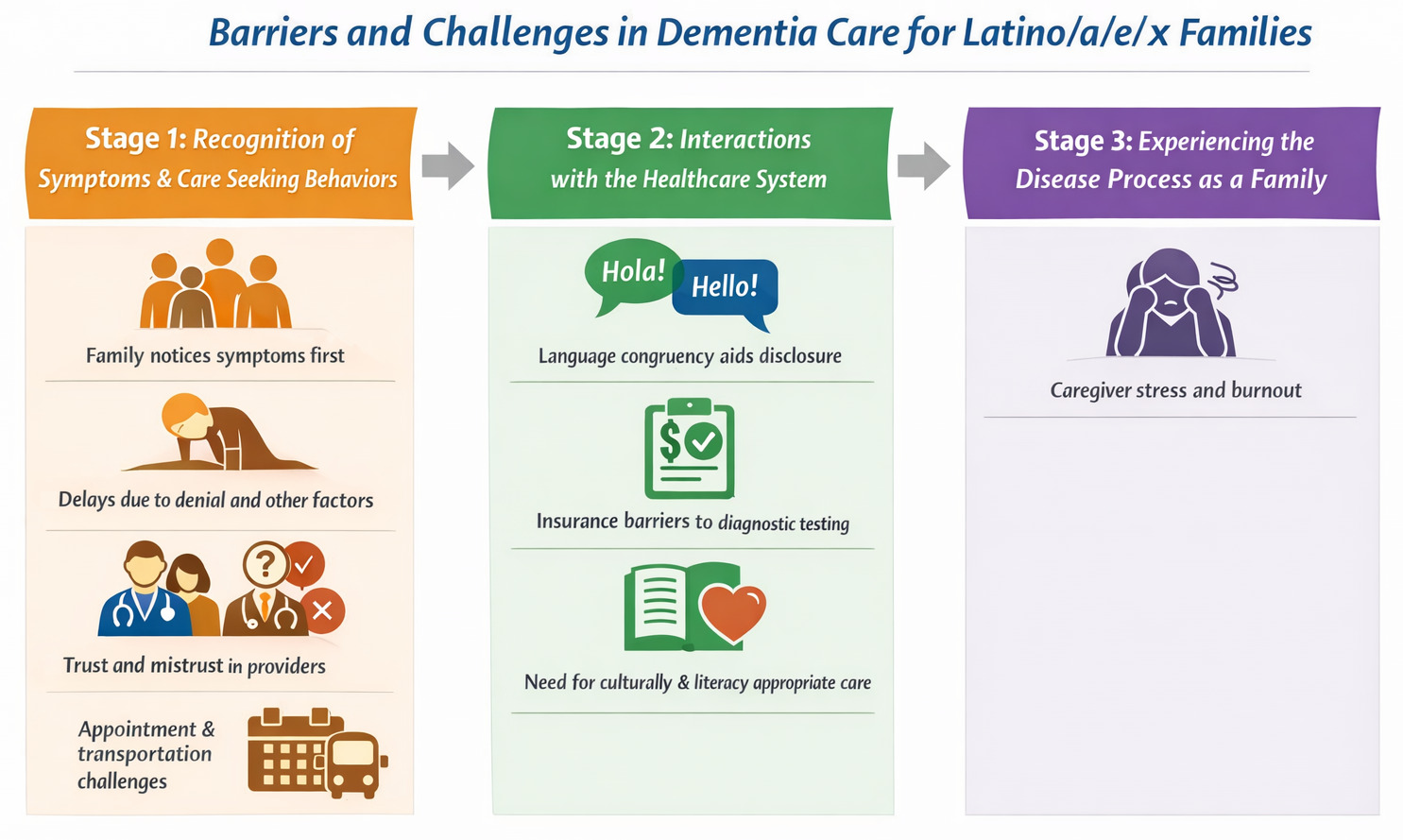
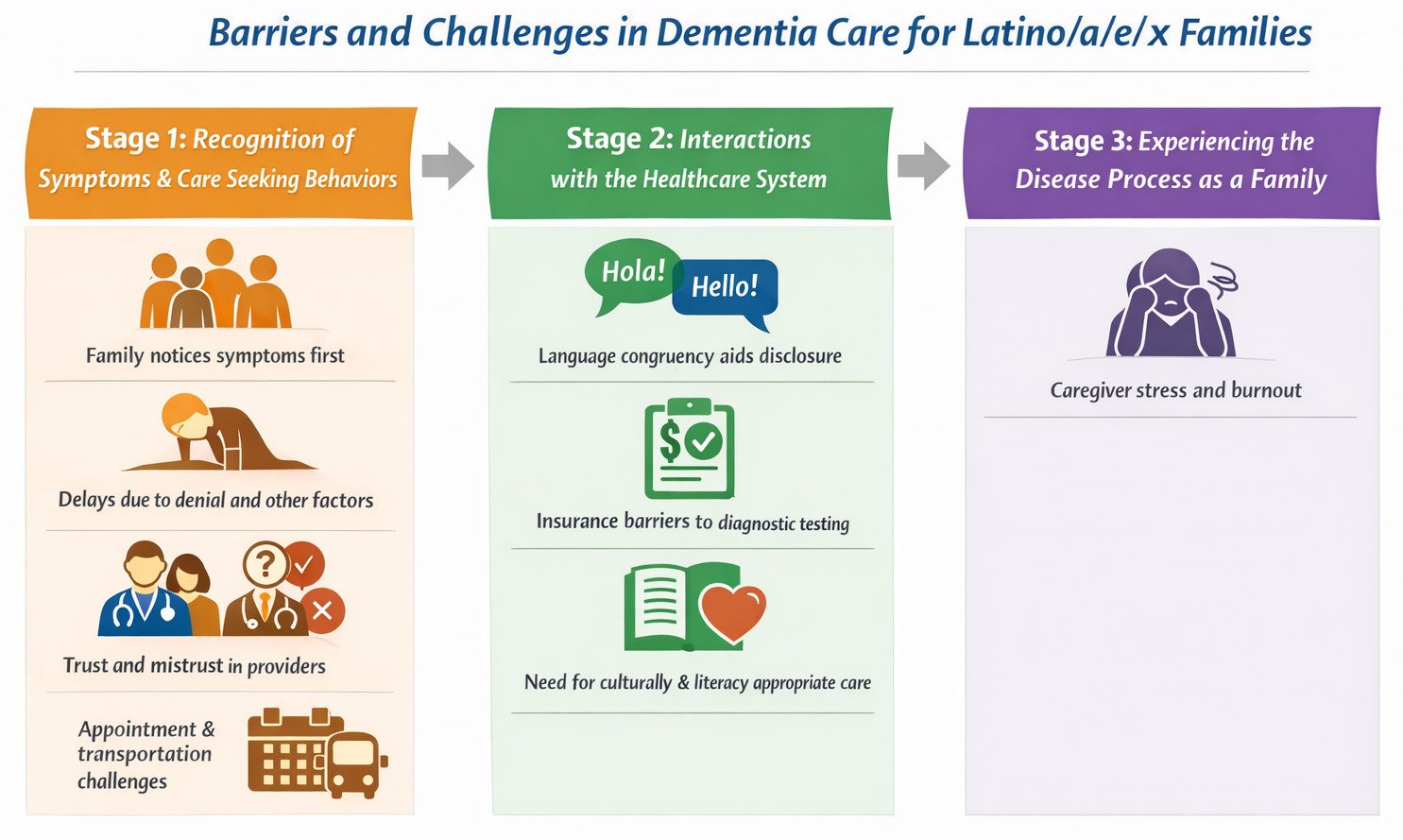
We present results in the order families typically experience them: Stage 1: recognition and care-seeking; Stage 2: health-system interactions for diagnosis and follow-on care; and Stage 3: experiencing the disease process as a family. We describe themes within each stage and provide quotes in the tables to exemplify the themes. Figure 1 provides a visual overview of the stages and sub-themes for this study.
Stage 1: Recognition of symptoms and care-seeking behaviors
This stage captures how memory concerns arise and how families decide whether to seek medical care. PCPs described recognition as something that happens in the home, where relatives notice day-to-day changes, where early action can be slowed by denial, stigma, and uncertainty about what constitutes “normal aging.” Ultimately, the decision to pursue care is influenced by trust in clinicians and practical logistics, most notably transportation and coordinating time with an informant. Table 1 details the sub-themes and provides illustrative quotations.
Theme 1: Family members notice symptoms first
In PCPs’ experience, a family member often expressed concern about the patient’s health, which prompted further diagnostic evaluation. Providers required patients to have informants living with them to better understand the extent of cognitive decline and what additional resources were needed. Familiarity with patients and their families was also identified by the PCPs as important for identifying symptoms and for comparing and contrasting symptoms across patients and their informants.
Theme 2: Delays in seeking care due to denial and other factors
PCPs said that many Latino/a/e/x patients in their practices tended to wait until severe symptoms presented to seek care for themselves, while family members of those with a diagnosis of ADRD did not seek care for the patient until they felt they could not take care of their loved one appropriately. PCPs expressed that symptoms might be brushed off as “a normal part of aging” until the cognitive decline of their loved one is too evident. The PCPs in this study attributed some delays in seeking care to fear of their loved one being labeled as “crazy” and fear of themselves developing ADRD in old age.
Theme 3: Trust/mistrust in healthcare providers
Participants described how mistrust in the healthcare system might be due to fear of deportation or potential impact on benefits (e.g., Social Security) or immigration procedures, among others. PCPs hypothesized that due to this mistrust, patients may delay seeking medical care, delaying necessary treatment and affecting their overall outcomes. Furthermore, participants commented that trusting relationships with PCPs can be built by providing culturally appropriate care and listening to patient concerns.
Theme 4: Appointment and transportation challenges
One of the main barriers described by participants treating Latino/a/e/x patients was the distance to be seen and the need for transportation. PCPs described how many older adults do not drive and rely on public transportation or rides from family or friends. Depending on the disease’s progression, patients may need to travel alone or have an informant, so appointments need to account for care partners’ work schedules.
Stage 2: Interacting with the healthcare system to get a diagnosis and subsequent care
This stage focuses on what happens once families seek a diagnosis and management for the condition. These themes explore how language, coverage, and health literacy shape the path from initial evaluation to diagnostic work-up and care planning. These factors determine whether a timely, accurate diagnosis is possible and whether recommendations are useful for patients and families. Table 2 shows the themes and some sample quotes.
Theme 1: Language congruency aids disclosure
PCPs distinguished between language-concordant care and interpreter-mediated encounters, noting that direct communication in a shared language facilitated rapport and more nuanced symptom disclosure. When language concordance was not possible, clinicians relied on translation/interpreter services, which most of them had available at their institutions. These services were provided free of charge in accordance with policy and regulations. However, the methods for accessing them varied widely (e.g., in person, by phone, or via video conferencing), and each method involved different barriers. The two most common perceived barriers to using translation/interpreter services were the coordination required to access the translator and the extra time their use added to the visit. PCPs described how in-person and video interpretation were generally preferred over telephone interpretation, particularly for cognitive assessments, as they allowed for observation of nonverbal cues and improved communication accuracy. In contrast, telephone interpretation was perceived as more challenging for evaluating cognitive function due to potential misunderstandings and lack of visual context, as well as the additional time required to coordinate these services.
Theme 2: Insurance barriers to diagnostic testing
Healthcare providers described a variety of diagnostic methods and treatment options, which showcase their unique backgrounds, levels of comfort in managing ADRD, and the type of insurance (or lack thereof) a patient has. Furthermore, PCPs acknowledged the financial barriers to referring patients for specialized care and some of the strategies in place; for instance, specialist services offer low-cost initial visits to ensure access to affordable medical care. However, PCPs also expressed that the cost can become a barrier when specialized care is required. Overall, PCPs reflected on the complexity of providing comprehensive care amid significant financial challenges.
Theme 3: Need for culturally and literacy-appropriate care
Providers expressed their patients’ interest in receiving linguistically and literacy-appropriate care, which sometimes requires creating resources from scratch to match patients’ educational backgrounds and native languages. Furthermore, these materials should include instructions for follow-up appointments or necessary testing, as patients might not answer the phone from unknown numbers, limiting the opportunity to provide additional instructions after the appointment.
Stage 3: Experiencing the disease process as a family
Here, we describe how families live with the diagnosis over time. Participants emphasized that strong caregiving expectations—rooted in familismo (defined as a cultural value emphasizing strong loyalty, mutual support, and obligation to the extended family, giving precedence to family needs over individual ones)22—often keep care within the home, yet these commitments do not insulate caregivers from emotional, physical, and economic burden. Table 3 presents the core theme and representative quotes.
Theme 1: Caregiver stress and burnout
Participants expressed how strong, family-oriented values are heavily influential within the Latino/a/e/x community, suggesting that there is a preference to care for family members at home rather than placing them in an assisted living facility after their diagnosis. Other comments from participants indicated that given the stigma associated with living facilities within the Latino/a/e/x community, many patients perceive that caring for their loved ones at home ensures the best care. However, PCPs further highlighted that caregivers also work and often experience stress and exhaustion, which might push them to seek support from their loved ones’ providers to find ways to overcome their overwhelming responsibilities.
DISCUSSION
We describe the challenges PCPs observe in Latino/a/e/x patients seeking an ADRD diagnosis in communities where these are underrepresented, and the potential ways to reduce them. Understanding these barriers from PCPs’ vantage point clarifies actionable, clinic-level levers (training, workflows, language access) and community interfaces (caregiver support, navigation) for diagnosis and follow-up. This perspective is important because PCPs are often the first point of contact for most Latino/a/e/x families with ADRD,23 especially given the diffusion of disease-modifying treatments that intensify demands on frontline capacity (e.g., triage, monitoring).24 Accordingly, new programs and initiatives should combine family-facing education with PCP- and system-facing supports to close delays and improve continuity of care across the diagnostic pathway.
Consistent with the existing literature, our findings highlight the role of family in the early detection of ADRD symptoms.25 Because Latinos are more likely to live in multigenerational homes,26 or have close family connections, PCPs in this study perceived that family members often are the first ones to recognize abnormal changes in their loved ones’ behavior. In our study, PCPs also described how these structures (e.g., families, friends) can also contribute to delays in seeking care, e.g., friction due to families needing to organize schedules across multiple members, normalization or overlooking of symptoms as part of “normal aging,” or fear to seek care due to immigration or legal issues, even among U.S. citizens who might live in a mixed-status household.27 PCPs also identified another cause for delays, which is the fear of developing ADRD if a parent already has it. Regardless of the perceived cause, current literature suggests that delays in care exacerbate disease progression, complicating management. These findings suggest that the use of culturally sensitive educational interventions can potentially reduce such delays and promote a better engagement of families in the healthcare process.28,29 Additionally, interventions that use simple, proactive prompts (e.g., asking relatives about observed changes, standardized brief screens) can enhance family awareness and result in early recognition and diagnosis.30
Familismo was consistently described by the PCPs in this study as an anchor to caregiving commitments, exemplified as a perceived preference for in-home care to ensure that the person with ADRD receives the best treatment. These results are supported by previous research, which found that Latino/a/e/x individuals do not question the need to provide care to their family members.31 PCPs described how individuals living in multigenerational homes may facilitate early symptom recognition,32 and also recognized that generational and acculturative factors might shift help-seeking behaviors, independence, and living arrangements (e.g., greater self-sufficiency among English-dominant later-generation adults). These insights suggest that care models should account for family-centered decision-making while also assessing caregiver capacity and support needs, as family availability alone does not ensure adequate support and might not account for competing work schedules, and awareness of community resources. Integrating brief, acculturation-aware questions (e.g., language preference, migration/tenure, norms about help-seeking) into social histories may align recommendations with family preferences and constraints and clarify referral needs.
Nonetheless, our study adds to the literature by exploring the PCP-reported experiences of caregiver burnout, a concern commonly overshadowed by the cultural expectation of family caregiving.25 PCPs reflected that as the health of the patient with ADRD deteriorates, caregivers are tasked with managing the increasing responsibilities and very frequently voice concern for both themselves and their family members’ future, as some feel ill-prepared for what the progression of the disease may look like. Per existing literature, Latino/a/e/x families with a strong social network report extensive support with the division of responsibilities to care for and help manage the stress that an ADRD diagnosis creates.25 However, not all patients have multiple family members caring for them; thus, their caregivers experience significant life adjustments. These findings highlight the importance of proactively recognizing burnout, and suggest that even when caregiving is culturally valued, incorporating early caregiver screening (burden, depression), routine counseling about respite, and streamlined referral to bilingual community supports can have benefits for caregivers and people living with ADRD. Previous research suggests that embedding bilingual, literacy-matched materials and warm hand-offs to community partners within primary care can buffer the burden.33,34
However, strong social ties and culturally appropriate resources for caregivers do not fully offset the hurdles families face when navigating coverage, affordability, and access to services. PCPs in this study also touched upon the importance of socioeconomic factors as key elements in access to healthcare services for Latino/a/e/x individuals with ADRD.35 PCPs described how health centers and healthcare providers navigate patients’ ability to pay, insurance coverage, and geographical barriers by creating comprehensive patient-centered processes that accommodate patients during appointments. These navigation burdens have been previously described in the literature, and our results further support the use of dedicated staff (e.g., patient navigators/community health workers) to reduce administrative loss-to-follow-up.33
The results of this study also provide additional evidence that language congruency between patients and PCPs is key to effective care. PCPs in this study and prior literature suggest that language congruence promotes the disclosure of symptoms and experiences that might otherwise get lost in translation and allows for better care overall. In a study conducted in early 2023, all 18 participants reported receiving better care from their provider because their provider spoke the same first language during their appointments. Additionally, there is a relationship between language-concordant care and stronger patient-provider trust, ultimately allowing patients to feel more comfortable and satisfied with the care they receive than when an interpreter is present,36 with implications for diagnostic conversations and cognitive testing, where nuance and rapport matter.
Our study similarly highlights the challenges and extended visit durations associated with using translation/interpreter services. Providers noted that phone interpreter services cannot read nonverbal cues and thus require on-site and online interpreter options to provide a better patient experience.37 PCPs described that a key barrier to using the translation/interpreter services was the required extra time needed for appointments, which was rarely accounted for, resulting in providers having to modify their schedules or facing trade-offs that risk lower-quality encounters. These findings are supported by current literature: several articles describe that interpreter-mediated consultations require substantially longer durations than standard visits.38,39 Several solutions have been reported in the literature to address these issues, including the use of structured scheduling templates that accommodate longer and task-intensive encounters,40 use of designated staff to perform cognitive assessment and other workflows within primary care,41 and streamlined interpreter trainings to participate in cognitive assessment42; overall these strategies can improve the quality of ADRD care for patients with limited English proficiency.
Implications for PCP training and system supports
Our findings suggest specific training needs that have the potential to expedite diagnosis in primary care: (a) efficient, culturally adapted cognitive screening workflows (including when to involve interpreters and how to document limitations); (b) practical navigation of insurance and referral pathways adapted for immigrant and mixed-status families; and (c) communication skills for delivering diagnoses and safety/risk counseling in Spanish or with interpreters. Participants’ concerns about interpreter-mediated cognitive assessments suggest that training should embed simulations with professional interpreters, time adjustments in scheduling templates, and access to bilingual educational materials. These competencies can reduce delays, improve symptom disclosure, and strengthen follow-through on work-ups, all of which are core to our aim of identifying modifiable behaviors and barriers at the PCP level. In parallel, health systems should track equity-focused process measures (e.g., time-to-screen, time-to-diagnosis by language preference) to evaluate impact.
Although patient/family experiences emerged strongly, the cross-cutting barrier was PCPs’ limited time, training, and adapted resources for ADRD in Latino/a/e/x populations. Based on participants’ suggestions, health systems should (1) build protected time for interpreter-involved cognitive assessments; (2) expand bilingual materials at appropriate literacy levels; (3) offer brief, modular training on ADRD diagnosis and culturally responsive counseling; and (4) streamline referral pathways to community organizations that support Latino/a/e/x caregivers.
This study has several limitations, including a small sample of PCP perspectives and a focus on urban settings in the Midwest region of the United States, where Latino/a/e/x populations are a minority, which may limit the generalizability of the results to other locations with greater experience and resources to assist Latino communities. Additionally, our use of clinician self-reports may under- or over-estimate specific barriers, and may reflect provider assumptions or biases when describing patient and family behaviors. Although member checking was not conducted due to the secondary nature of this analysis, several strategies were employed to enhance credibility and trustworthiness of our results. These included analyst triangulation through independent and double coding, regular consensus meetings with documented decisions to resolve discrepancies, and iterative refinement of the codebook to ensure consistency across transcripts. We also used the RADaR technique to support systematic and transparent data reduction and comparison. Additionally, the consistency of our findings with existing literature further supports the credibility of the results. Additionally, this study reflects only primary care provider perspectives, which may not fully align with the experiences of patients and family caregivers.
Future research should incorporate direct input from Latino/a/e/x individuals with ADRD and their caregivers to more comprehensively capture barriers to care. Expanding the geographical scope, particularly to regions with varying resource availability, may further enhance the generalizability of findings. Additionally, future work could also link PCP-reported barriers to quantifiable effects (e.g., time-to-assessment, referral completion) and test multilingual workflow innovations in pragmatic trials.
CONCLUSION
PCPs identified multiple barriers affecting access to ADRD care among Latino/a/e/x patients, including challenges related to language, care-seeking delays, and caregiving demands. These findings highlight the need for culturally appropriate care plans and resources that account for family dynamics, cultural values, language and literacy needs, and socioeconomic constraints. Health systems could pilot solutions such as protected-time visit templates for cognitive assessment with interpreters; deploy bilingual, literacy-matched materials; and offer simulation-based training in interpreter-mediated cognitive evaluation and the delivery of diagnoses. Future efforts should consider multi-level interventions that address patient, provider, and system factors, while recognizing that these findings reflect PCP perspectives from a specific sample and context.
Corresponding author
Jaime Perales-Puchalt, PhD
University of Kansas Alzheimer’s Disease Center,
Fairway, KS 66205, USA. 913-588-3716
Email: jperales@kumc.edu
Acknowledgments
Dr. Perales-Puchalt thanks the national and local organizations that have partnered with him to conduct present and past research since 2015. The research team thanks the research participants who participated at all stages of this research, as well as anyone who has contributed directly or indirectly to this research. The ideas and opinions expressed herein are those of the authors alone, and endorsement by the authors’ institutions or the funding agency is not intended and should not be inferred.
Conflict of Interest
The author(s) declared no conflicts of interest with respect to the research, authorship, and/or publication of this article.
Funding
This work was supported by the National Institute on Minority Health and Health Disparities under Award Number K01 MD014177 (PI: Perales-Puchalt), the National Institute on Aging of the National Institutes of Health under Award Numbers P30 AG072973 and R01 AG082306, the National Institute of General Medical Sciences under Award Number P20 GM139733, and the Clinical and Translational Science Award (CTSA) program, through the NIH National Center for Advancing Translational Sciences (NCATS), grant UL1TR002373. Dr. Mora Pinzon is funded by the National Institute On Aging of the National Institutes of Health under Award Number K99AG076966 and R00AG076966. The content is solely the responsibility of the authors and does not necessarily represent the official views of the National Institutes of Health.
Ethical Approval and Informed Consent Statements
The University of Kansas Medical Center Institutional Review Board approved this project (STUDY00145615) on 4/20/2020. A Data User Agreement between the University of Wisconsin-Madison and the University of Kansas Medical Center was executed to allow the sharing of de-identified data for this analysis. The UW-Madison Health Sciences Institutional Review Board (IRB) determined that this research met the criteria for exemption.
Consent to Participate
Participants provided written informed consent before starting the interviews.
Data availability statement
Data is available upon reasonable request to the corresponding author at jperales@kumc.edu.
Disclosure of AI Use
During manuscript preparation, the authors used Microsoft Copilot and Grammarly in two specific ways: (i) to help generate a schematic figure summarizing study themes (Figure 1); and (ii) to assist with minor language edits for clarity, grammar, and formatting. The AI system was not used for data analysis or for making interpretive decisions related to study findings. All AI-generated outputs were independently reviewed, edited, and validated by the authors, who take full responsibility for the manuscript’s accuracy and integrity. No non-public, identifiable, or confidential participant information was entered into the AI system.